Lever-on-Rose vs Lever-on-Backplate: When Each Is Right
29 June 2026On a product listing, lever-on-rose and lever-on-backplate handles look almost interchangeable. In practice, picking the wrong one means you're back on site fitting something you shouldn't have ordered. This guide cuts to the three things that actually matter: existing door condition, lock body pairing, and long-term durability, and gives you a decision for every common scenario.
The key differences
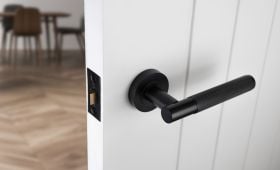
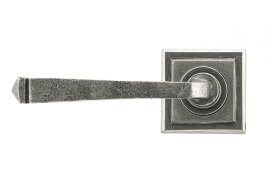
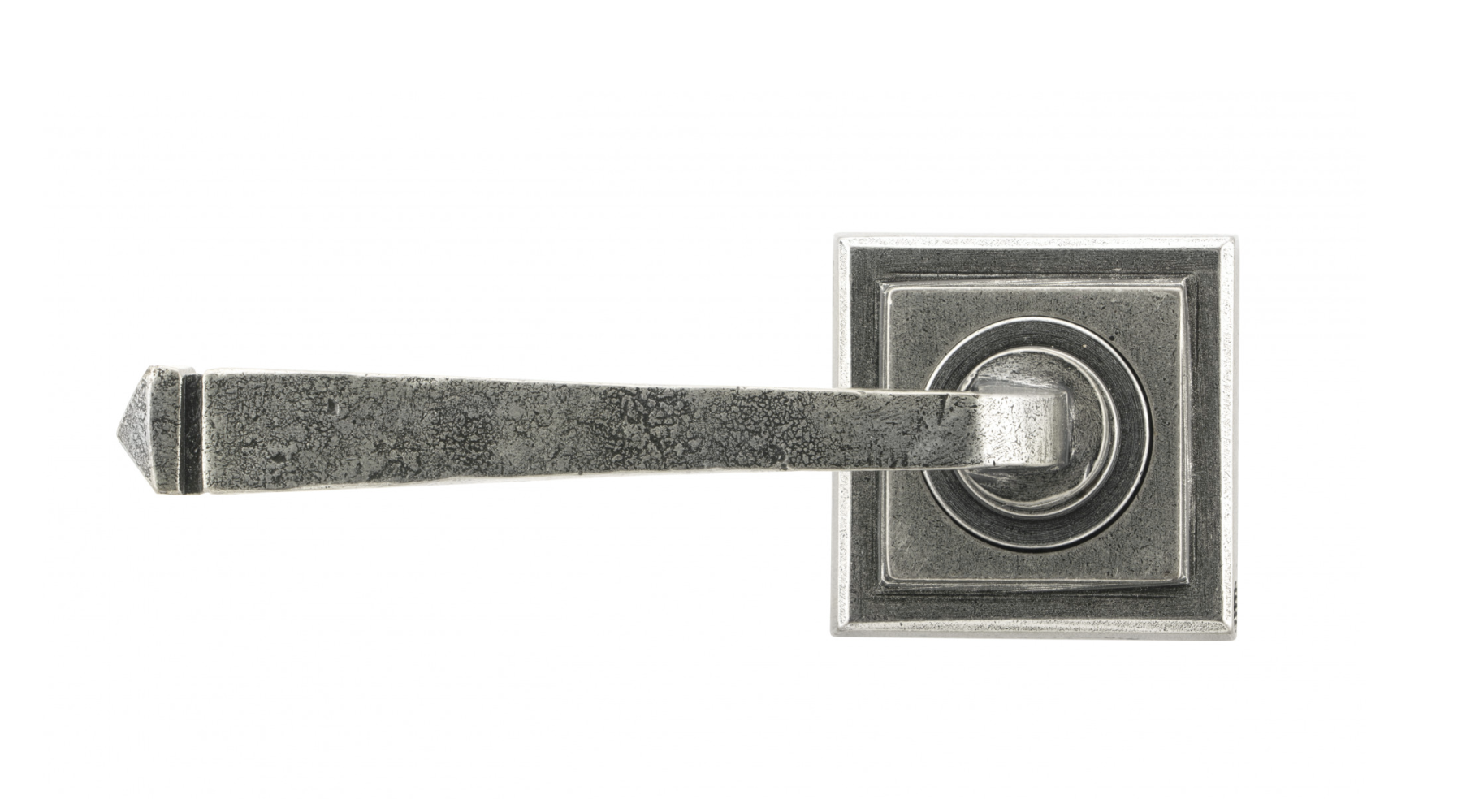
A lever on rose sits on a small circular (or square) plate behind each lever, with a separate escutcheon for the keyhole or thumbturn. A lever on backplate has a single long plate behind the lever that integrates the keyhole or thumbturn into the same piece of metal. That's the whole visual difference, but it changes how you spec the lock, the fixings, and what the handle will look like in five years' time.
When lever-on-rose is the right spec
Reach for lever-on-rose sets when you've got a clean canvas: new-build residential, contemporary refurbs, hospitality fit-outs, or any job where the architect wants minimal visible hardware.
One thing worth knowing: cheaper rose sets are unsprung and rely entirely on the latch spring to hold the lever horizontal. Pair an unsprung rose with an unsprung latch and the levers won’t work. On external doors, high-traffic jobs, or anything over 35kg, specify a sprung rose or pair with a heavy-sprung latch. Ranges like Carlisle Brass and From The Anvil both offer sprung rose variants, so it's worth filtering for this on the product page before ordering.
Bolt-through fixings (rather than grub-screws) are the other upgrade that earns its money on anything used frequently.
When lever-on-backplate is the right spec
Lever-on-backplate sets earn their keep in three situations: period restoration, retrofits where the existing door has old fixing damage you need to cover, and high-cycle jobs where you want the extra rigidity of a plate that distributes load over multiple fixings.
Backplates come in several variants and you need to match the right one to the lock body:
Latch backplate - no keyhole, for internal doors without a lock
Lock (sash) backplate - keyhole below the lever, for sash locks
Bathroom backplate - thumbturn and emergency release
Euro-profile backplate - for euro cylinders (commercial and modern residential)
Oval-profile backplate - for oval cylinders
If you're specifying for an HMO entrance, care home, or rental retrofit, this is almost always the right choice, Atlantic UK, Heritage Brass, Frelan Hardware and Stonebridge all have extensive ranges covering these use cases. For period and Art Deco work, Croft Hardware's backplate ranges are worth a look.
Sizing quick reference
Spec | Rose set | Backplate set |
|---|---|---|
Typical backset | 57mm | 57mm |
Typical case size | 64mm | 76mm |
Standard spindle | 8mm | 8mm |
Lock pairing | Tubular latch / sash lock | Mortice lock / sash lock |
Works on FD30/FD60 | Yes - check CERTIFIRE on the SKU | Yes - check CERTIFIRE on the SKU |
Always confirm CERTIFIRE approval on the specific product when fitting to a fire door as a non-certified fitting can invalidate the door's certification.
The trade decision matrix
Scenario | Recommended | Why |
|---|---|---|
New-build residential, contemporary scheme | Lever-on-rose (bolt-through, sprung rose) | Clean look, works on fresh doors |
Period property restoration | Lever-on-backplate | Aesthetic match, pairs with mortice lock |
Retrofit over damaged existing doorset | Lever-on-backplate | Covers old fixing holes |
FD30 fire door, commercial fit-out | Either - CERTIFIRE-approved | Compliance first, aesthetic second |
HMO entrance doors | Lever-on-backplate, sash lock variant | Rigidity and insurer-friendly |
Care home or high-traffic | Lever-on-backplate | Load distribution, long-term durability |
Hospitality, design-led | Lever-on-rose, PVD finish | Finish longevity on a premium look |
Tenanted residential replacement | Lever-on-backplate | Forgives old hole patterns |
Common mistakes to avoid
Specifying rose sets without a sprung rose or sprung latch
Fitting rose sets over old backplate fixing damage - exposed holes look worse than the original
Mixing finishes across rose, escutcheon and hinges
Ordering unsprung rose sets for external doors
Mismatching the escutcheon profile (euro vs oval) to the cylinder
Assuming "fire-rated" on one SKU covers the matching escutcheon - check both
FAQ
Can I replace a lever-on-backplate with lever-on-rose on the same door?
Usually, but with caveats. If the existing backplate is covering old fixing damage, a rose set will expose it and look worse than what's already there. You'll also almost certainly need to swap the lock body.
Do rose handles come loose more easily than backplate handles?
Only if they're under-specified. A good bolt-through rose set on a properly sized spindle will hold up fine for domestic use. The failure mode people remember is cheap unsprung rose sets paired with an unsprung latch, the lever will not work, or begin drooping immediately. Specify a sprung rose or pair with a sprung latch and the problem disappears.
What's the difference between a sprung rose and an unsprung rose?
A sprung rose has an internal spring that returns the lever to horizontal on its own. An unsprung rose relies entirely on the latch spring to do that job. If you're fitting to a heavy door, a fire door, or anything used 50+ times a day, always go sprung as it's the single biggest factor in whether the handle feels solid in three years.
Are lever-on-rose handles suitable for fire doors? Yes, provided the specific SKU carries CERTIFIRE approval and the matching escutcheon does too. The rating is product-specific, not range-wide - one variant in a range can be certified while another isn't. Always check the certification on the individual product page before ordering for an FD30 or FD60 door.
What's the standard backset for lever-on-rose handles in the UK? 44mm is the standard backset for rose sets paired with tubular latches on internal doors. The matching case size is typically 64mm. If you're fitting to a sash lock instead, confirm the lock's backset matches before ordering.
In Summary
Rose sets for clean, contemporary and new-build work. Backplate sets for retrofits, period work, and anything that needs to hold up under daily use. Confirm the lock pairing, and check fire certification on the specific SKU before you order.
Browse our full range of lever-on-rose handles and lever-on-backplate handles, filter by finish and brand, and if you're ordering for a job get in touch about a trade account.